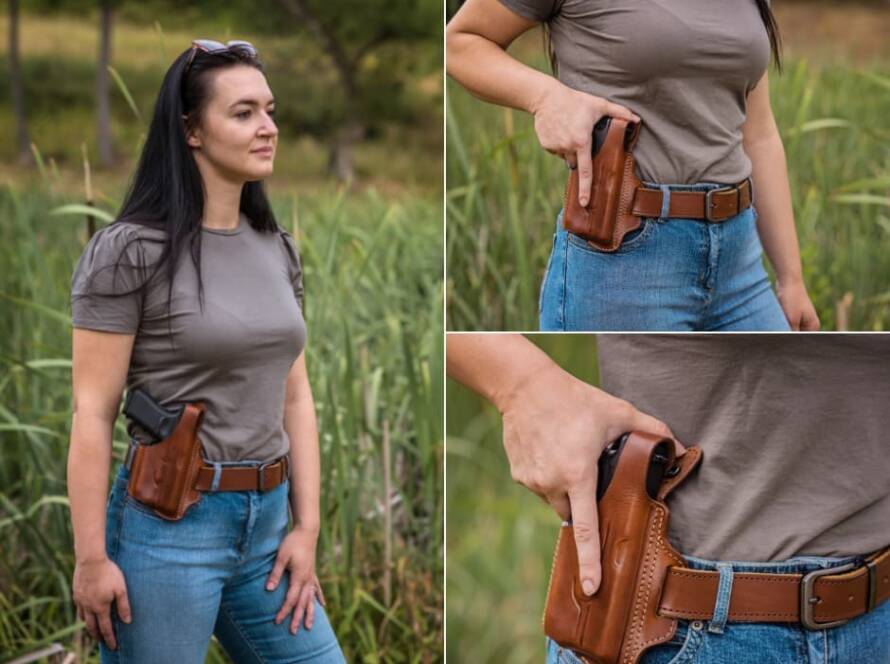
When it comes to carrying firearms in public, understanding the laws can be a bit challenging People can carry firearms in two main ways: concealed carry and open carry. While all states in the USA allow concealed carry to some degree, open carry laws vary more widely.
Historically, many states have not regulated the visible carrying of firearms, or open carry. However, as open carry has increasingly become a method used by extremists, some states have taken action by banning it, requiring a permit, or restricting certain types of firearms.
In some states, you can still openly carry a firearm without any type of permit. Understanding these differences is crucial for responsible gun owners who want to stay compliant with their state’s laws.
What is Open Carry?
Open carry refers to carrying a firearm in plain sight in public. Some states define it as carrying a partially visible firearm, whereas others require the weapon to be fully visible. This distinction is essential as laws vary from state to state.
Understanding these regulations can be challenging, especially with factors like age limits, criminal history restrictions, and specific geographic limitations. This blog aims to simplify these complexities, providing clear and easy-to-understand information about the state-by-state rules for open carry in the United States.
Whether you are a gun owner, a prospective gun buyer, or simply interested in the topic, read on to gain insights into the intricate landscape of open carry laws nationwide.
Four Main Open Carry Categories
The four main categories of open carry laws most states fall into:
Permitless Open Carry
Permitless open carry means that people who are legally allowed to own a gun can openly carry it without needing a special permit or license. However, even in states where open carry is allowed, there are still places where you cannot bring a firearm, such as schools, churches, public transportation, places selling alcohol, and state-owned buildings.
In some states, the law completely preempts all local firearms regulations, meaning the state law overrides local laws. These states do not require a permit to carry firearms openly for most citizens who are not prohibited from owning a gun. Typically, open carry is allowed when you are on foot, though rules for carrying a firearm in a vehicle can vary and may require a permit.
Understanding these rules is crucial for responsible gun owners to ensure they comply with local and state regulations while exercising their right to open carry.
States allowing open carry without a permit are –
- Alabama – You must be at least 18 years old.
- Ohio – Legal for 18 and older.
- Oklahoma – Must be at least 21, or 18 for military members.
- Pennsylvania – Legal at 18, but not allowed in vehicles and restricted in Philadelphia.
- South Dakota – Minimum age is 18.
- Tennessee – You need to be 21 or 18 if you’re in the military.
- Texas – Must be 21 and carry the firearm in a holster.
- Utah – Legal at 21.
- Vermont – Must be 18 or older.
- Virginia – Legal for 18-year-olds, but some local laws restrict it at public gatherings.
- Washington – Open carry permitted at 21, but not in vehicles.
- West Virginia – Allowed at 18.
- Wisconsin – You need to be at least 18.
- Wyoming – Legal at 18.
Open Carry with Permit
Licensed open carry refers to the legal right to openly carry a firearm in public, provided the gun owner has obtained the necessary permit or license. In some states, individuals must have this permit to carry their firearms openly, whether on foot or in a vehicle. This rule ensures that only responsible and vetted individuals can openly carry firearms.
However, in states that require a license, it’s essential to know that some authorities rarely grant these permits to average citizens, making it difficult to practice open carry even if it’s legally allowed. This approach balances the right to bear arms with public safety concerns.
States requiring a permit for open carry are –
- Connecticut – Must be 21 or older. Court rulings suggest that open carry may still lead to arrest depending on circumstances.
- Georgia – Legal at 21, or 18 for the military. Not specifically addressed in recent laws.
- Hawaii – Must be 21, permits valid only in the issuing county.
- Maryland – Legal at 21, or 18 for work purposes.
- Massachusetts – Only if you have a valid Class B permit, but no new Class B permits are issued.
- Minnesota – You need to be at least 21.
- New Jersey – Open carry is not explicitly illegal, but guidelines are unclear.
- North Dakota – Legal at 18.
- Rhode Island – Permitted if you have a permit issued by the Attorney General and are 21 or older.
- South Carolina – Must be 21.
Limited Open Carry
Carrying a gun openly, known as open carry, comes with different rules depending on where you are. In some places, it’s generally allowed by state laws, but local governments can have their own stricter laws. For example, carrying openly might be easier for residents than for non-residents.
In states like California, open carry is usually not permitted. There are a few exceptions, like in areas with low population density where local authorities might allow it with a special permit. These rules can vary a lot depending on the local jurisdiction.
Understanding your local laws is crucial if you’re considering open carry, as some areas might allow it while others strictly prohibit it. Always check both state and local regulations to stay compliant.
States with restrictions on open carry (e.g., specific locations only) –
- Colorado – Minimum age of 18.
- Michigan – You must be 18 and the gun should be registered in your name. For non-residents, a valid permit from a recognized state is needed.
- Missouri – The minimum age is 19, but 18 for military members.
- Nebraska – Need to be at least 18.
- Oregon – Open carry permitted at 18.
No Open Carry
In some states, openly carrying a gun is mostly against the law, except in limited situations like hunting or legal self-defense. However, there are states where open carry is generally allowed without a license. Even then, there might be extra rules for those without a license, such as local restrictions or certain areas where carrying isn’t allowed. Sometimes, if you have a license, you might be exempt from these local rules, but that’s not always the case.
States that generally prohibit open carry of firearms are –
- California – Generally prohibited, but licenses can be issued in less populous counties. Those licenses are valid only in the county where issued.
- Florida – Only allowed while fishing, camping, hunting, or at an indoor range.
- Illinois – Not allowed.
- New York – Not allowed.
- Washington DC – Not allowed.
Why State Laws Matter?
Each state in the U.S. has its own set of laws and regulations, including those related to the open carrying of firearms. Understanding and adhering to these state-specific laws is crucial for several reasons:
- Public Safety: State laws are designed to protect residents and maintain order. For example, restricting open carry in schools or places where alcohol is served helps minimize the risk of firearm-related incidents in high-risk areas.
- Legal Consequences: Ignorance of state laws regarding open carry can lead to severe legal penalties. Violating these laws can result in fines, imprisonment, or both.
- Community Trust: Adhering to state laws fosters trust within communities. When individuals follow the regulations, it demonstrates respect for the safety and well-being of others.
Each State Has Unique Regulations
Here are some key points highlighting the uniqueness of state laws on open carry:
- Licensing Requirements: Some states mandate that individuals obtain a special license to openly carry a firearm.
- Restricted Areas: Most states have specific locations where open carry is prohibited, such as schools, government buildings, or establishments serving alcohol.
- Age Limits: States may also impose age restrictions on who can legally carry a firearm openly.
Consequences of Not Following Specific State Laws
Failure to adhere to state-specific open carry laws can have significant repercussions:
- Legal Penalties: Violating open carry laws can lead to criminal charges, including hefty fines and imprisonment.
- Confiscation of Firearms: Authorities may confiscate firearms from individuals who are found to violate open carry regulations.
- Social and Community Impact: Breaking these laws can erode trust within the community and lead to stigmatization.
Understanding and respecting state laws related to the open carrying of firearms is essential for anyone who wishes to exercise this right responsibly.
Safety and Responsibility
Open carry can be a responsible way to protect yourself and others, but it comes with great responsibility and the need for safety measures. Here’s how to ensure you handle your firearm safely and responsibly while open carrying.
Importance of Handling Firearms Safely and Responsibly
- Always Treat Every Firearm as if It Is Loaded: This fundamental rule ensures that you handle each gun with the utmost care, reducing the likelihood of accidental discharge.
- Keep The Muzzle Pointed in a Safe Direction: Never point your firearm at anything you do not intend to shoot. Ensuring the muzzle is directed safely can prevent tragic accidents.
- Finger Off the Trigger Until Ready to Shoot: One of the most crucial safety measures, keeping your finger off the trigger until you are ready to fire, mitigates the risk of unintentional firing.
- Know Your Target and What’s Beyond It: Always be aware of your target, what is beyond it, and what might move into your path, to avoid causing harm to unintended entities.
Encouragement for Open Carriers
- Awareness of Surroundings: Always stay vigilant and be aware of the environment around you. Know who and what is near you to maintain your safety and the safety of others.
- Act Calmly and Non-Threateningly: Aim to carry your firearm in a manner that does not provoke fear or apprehension in the public. This means staying calm and composed.
- Engage Law Enforcement Respectfully: If you are approached by law enforcement, engage with respect and cooperation to ensure a smooth interaction.
- Educate Yourself Continuously: Stay updated on local laws, safety practices, and situational awareness techniques to enhance your competency and safety.
By adhering to these principles, open carriers can ensure they are not only protecting themselves but also contributing positively to the safety and perception of their communities.
Conclusion
Understanding your state’s open carry laws is crucial before carrying a firearm openly. Each state has unique regulations, and knowing these rules can help you avoid legal troubles and ensure public safety. Open carry comes with responsibilities that go beyond just following the law — it involves handling firearms safely and respecting your community.
By thoroughly researching and educating yourself about state-specific laws, you can confidently and responsibly exercise your Second Amendment rights. Always prioritize safety and stay informed to maintain trust and peace in your community.
Remember, responsible open carry practices help protect not only yourself but also those around you. Prioritize knowledge and safety to ensure a lawful and respectful approach to open carry.