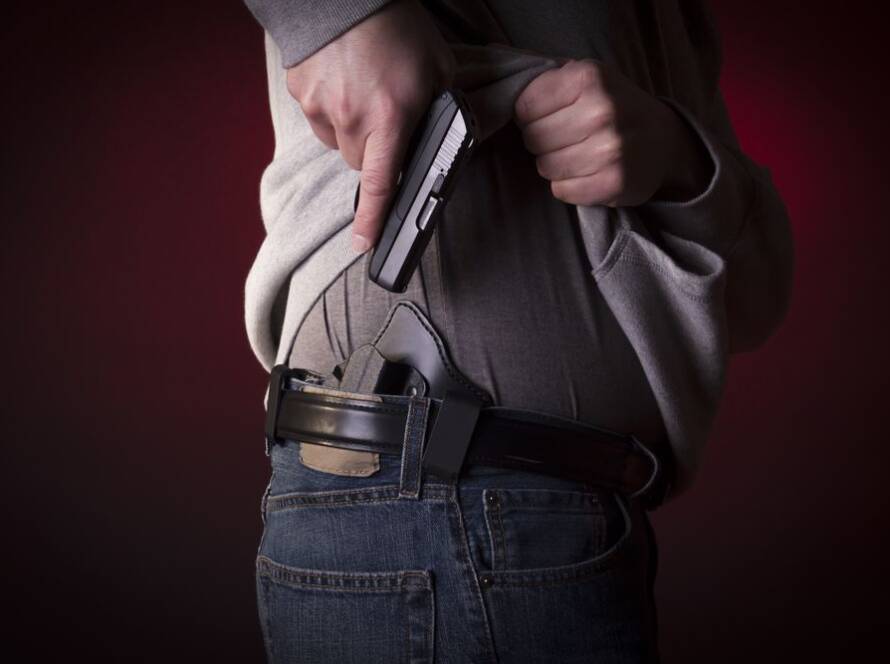
Carrying a concealed weapon in a car comes with its own set of complexities. Concealed carrying a firearm in a vehicle necessitates careful consideration of safety, legality, accessibility, and concealment. We need to prioritize safety and stay informed about the laws in our jurisdiction to ensure responsible and lawful concealed carry in a vehicle. There are numerous legal factors to take into account when driving with a firearm, including crossing state lines, renting a vehicle, and even passing through certain zones. Additionally, there is the added challenge of safely carrying and drawing a weapon from inside a vehicle.
Below are some essential steps and recommendations for accomplishing this task effectively and responsibly:
Familiarize Yourself with the Law
State and Local Regulations: Take the time to acquaint yourself with the laws pertaining to carrying a concealed weapon in a vehicle in your state and locality. These regulations can vary significantly and may dictate the manner and location in which you can carry a firearm in your car.
Permit Requirements: Ensure that you possess the appropriate concealed carry permit if it is mandated by your jurisdiction. Additionally, some states have specific laws governing the transportation of firearms in vehicles, even for individuals with permits.
In certain states, as long as you are legally authorized to carry a weapon, you can transport a loaded gun in your vehicle. However, in other states, the regulations are more stringent, and you may be required to obtain a permit or adhere to specific guidelines when transporting a loaded or unloaded firearm.
To ensure compliance with the law, it is advisable to familiarize yourself with the regulations in your state regarding firearm possession in vehicles. It is important to note that there is a distinction between concealed carry and simply transporting a weapon, and the regulations may differ accordingly.
There exists a distinction between concealed carry and transporting a firearm in a vehicle, such as when heading to a shooting range, going hunting, or returning home from a gun shop. It is crucial to recognize this difference, as the laws governing each are typically quite distinct. In general, if you are carrying a gun that is not visible, you are engaging in concealed carry and will likely require a permit to do so.
Selecting the Appropriate Holster
Selecting an appropriate holster for a car ensures proper concealment and accessibility.
Car Holster: Consider utilizing a holster specifically designed for vehicle carry. These holsters can be mounted in various positions within your car, such as under the steering wheel, on the center console, or beneath the dashboard.
Retention: Verify that the holster provides adequate retention to keep the firearm secure while driving. A holster with adjustable retention can assist in achieving a customized fit.
Accessibility: The holster should enable you to swiftly access your firearm in case of an emergency. Test the holster’s position to ensure that you can draw the gun smoothly and without any obstructions.
Car concealed carry holsters are intended to be mounted in different areas of your vehicle to provide easy access while driving. Some of them utilize magnetic strips, while others secure your weapon in a holster-like shell or strap.
Using your car as a holster instead of carrying it on your body poses several problems. Firstly, it makes your weapon vulnerable to theft and unauthorized use. Additionally, it becomes harder to access in case of an emergency. Moreover, if you need to exit your vehicle for any reason, you lose access to your protection entirely. To ensure the best way to conceal carry in your vehicle, it is recommended to carry your weapon on your person, just like you would everywhere else.
One recommended carry position for driving is the cross-body position. Although not commonly used in everyday situations, it offers both comfort and easy access while seated, making it an excellent choice for long hours in the car. Shoulder and high ride holsters are another good option. To determine the best driving carry position for yourself, it is recommended to try different methods until you find what works best.
Exploring Mounting Options
While off-body carry is not always advised, it can be suitable for car concealed carry, especially during long-distance drives. Keeping your firearm in a purse or bag next to you allows for convenient access and exceptional comfort since it is not directly on your body.
Magnetic Holsters: Magnetic holsters can be affixed to different parts of your car, offering a secure and easily accessible location for your firearm.
Quick-Access Safes: Install a small, quick-access safe in your vehicle. These safes provide additional security and can be swiftly opened using a key, combination, or biometric lock.
Console or Glove Box: If permitted by your state laws, you can store your firearm in the centre console or glove box. Ensure that it is securely stored and not easily visible.
Ensuring Concealment
Discreet Placement: Position the holster or firearm in a location that is not readily visible from outside the car. This helps deter theft and maintains the element of surprise during emergencies.
Covering: Utilize a cover, such as a seat cover or other car accessories, to further obscure the presence of the firearm and holster.
Safety Precautions
Secure Mounting: Guarantee that the holster or safe is firmly mounted to prevent the firearm from becoming a projectile in the event of sudden stops or accidents.
Trigger Discipline: Maintain your finger off the trigger until you are prepared to fire. Confirm that the holster adequately covers the trigger guard to prevent unintentional discharge.
Regular Inspections: Periodically examine the holster and mounting to ensure they remain secure and operational.
Practice and Training
Drawing Practice: Routinely practice drawing your firearm from its concealed position in your car. This will ensure that you can do so swiftly and effectively if necessary. Scenario Training: Consider undergoing training for various scenarios that you may encounter while in your vehicle. This includes practicing accessing your firearm under different conditions, such as while seated and wearing a seatbelt.
Legal Considerations During Interactions
Informing Law Enforcement: Familiarize yourself with the legal requirements for informing law enforcement that you are carrying a concealed weapon during a traffic stop. Some states mandate immediate disclosure, while others do not. Documentation: Keep your concealed carry permit and other relevant documents easily accessible to present to law enforcement if necessary.
Final notes:
It is crucial to be well-informed about the regulations and have a clear strategy for safe and efficient car concealed carry, considering the amount of time spent in vehicles. Prior to carrying a firearm in your car, it is essential to familiarize yourself with the state laws and regulations. Subsequently, determining the method and location of carry is vital to ensure comfort and accessibility of your pistol.